
StoryOlive vs Drops for Hebrew
If you want to read whole Hebrew sentences, StoryOlive gives you 1,200+ stories at your level, with native audio. If you only want a five-minute word game with pictures, choose Drops.
Read a free story By Robert MacAlpine, founder of StoryOlive · Updated
| Feature |  StoryOlive |  Drops |
|---|---|---|
| Stories written for learners | 1,278 stories at six levels, from beginner to fluent | None, just words and short travel phrases |
| Audio | Native audio on every story | A native speaker for each word |
| Word meanings | Picked from the whole sentence | One meaning per word, shown with a picture |
| Hebrew grammar | Root and grammar for every word | None (grammar lessons cover 9 other languages) |
| Dictionary | 21,500+ entries, each with its root | 2,000+ Hebrew words in topic lists |
| Verb forms | 120,000+ forms across 4,400+ verbs | None |
| Saved words | One card per word, with or without prefixes | Basic forms only, in fixed topic lists |
| Made for | Hebrew only | 55+ languages at once |
| A picture for every word | No | An illustration for every word |
| Free every day | Only your first stories are free | 5 minutes a day on the free plan |
| Price | $24 a month, or $12 a month yearly | $11 a month, or $69.99 a year |
| Read a free story |
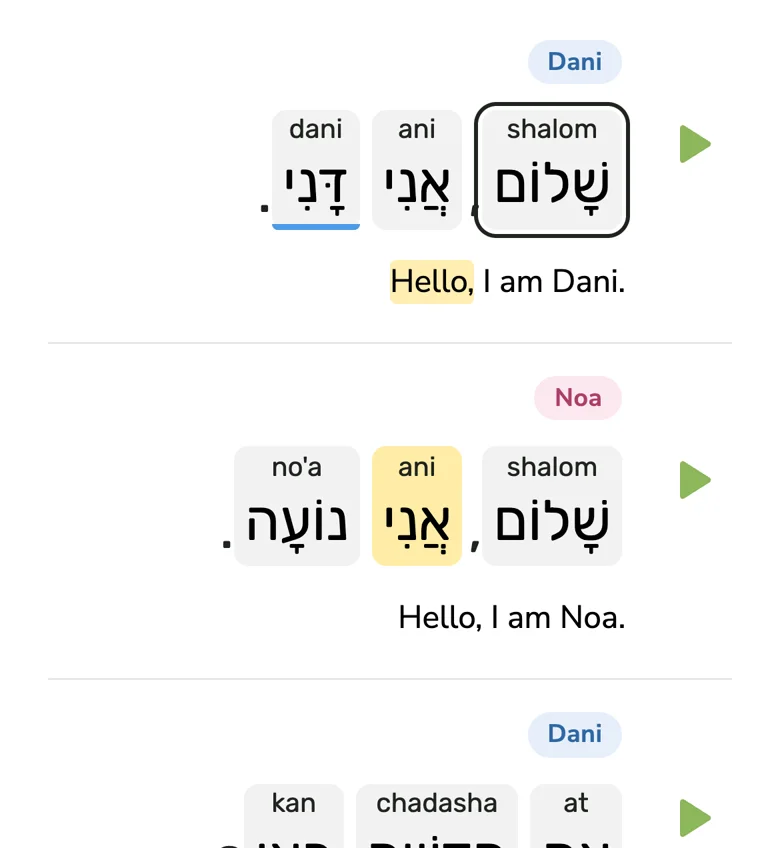
Every story has native audio
Every StoryOlive story comes with high-quality native audio, recorded for that story. You can play the whole story, one sentence, or a single word.
Drops plays a native speaker saying each word on its own. You don't hear the words inside a sentence.
1
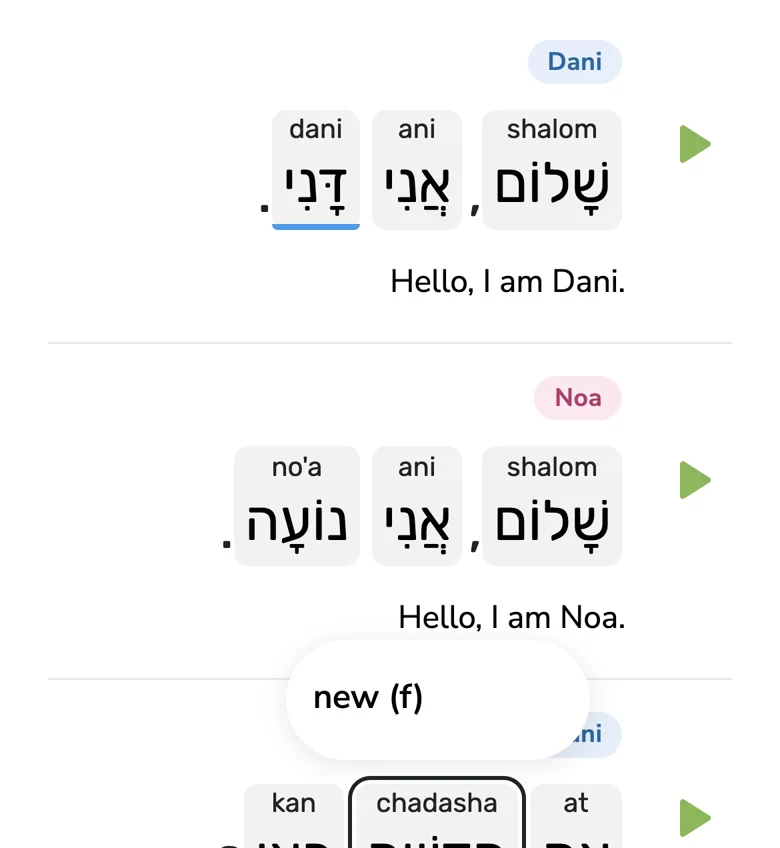
Tap a word to see what it means in that sentence
StoryOlive reads the whole sentence, not just the letters, so it shows you the right meaning. Without vowels, and are spelled the same, and you still get the right one.
Drops teaches each word with a picture and one meaning. That works for a word like dog or cup, but a sentence in a real text has no picture next to it.
2
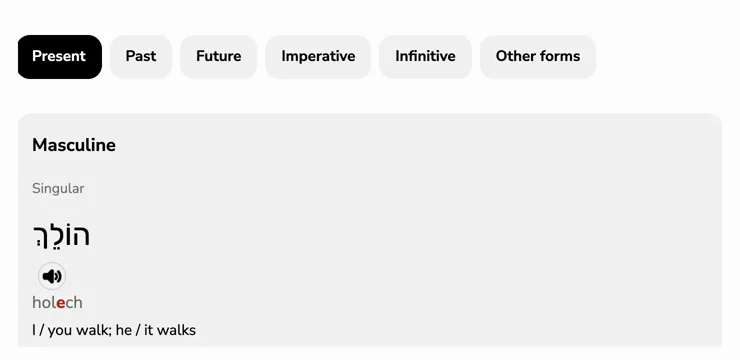
Every word has its own dictionary entry
Tap any word to open a full dictionary entry made for Hebrew. You see its root and its meanings, and for a verb, every form with vowel marks and audio.
Drops now has grammar lessons for nine languages, and Hebrew isn't one of them. In Hebrew, you learn the words without their grammar.
3
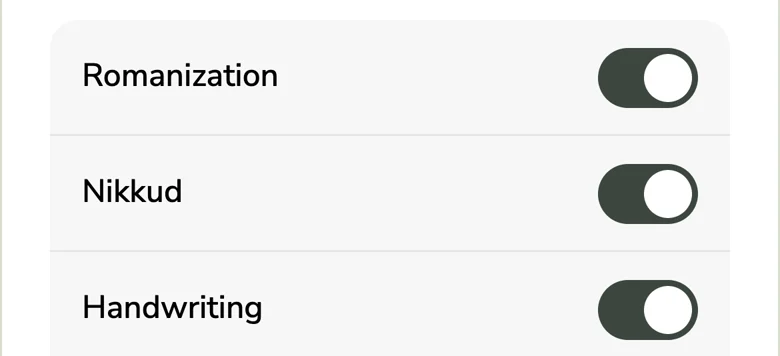
Advanced support for the Hebrew script
Keep the vowel marks (nikud) on while you learn, and switch them off when you're ready. You can also switch to handwriting, or show the romanization above every word.
Drops teaches single words in a game, so it has no stories where you could read with these switches.
1
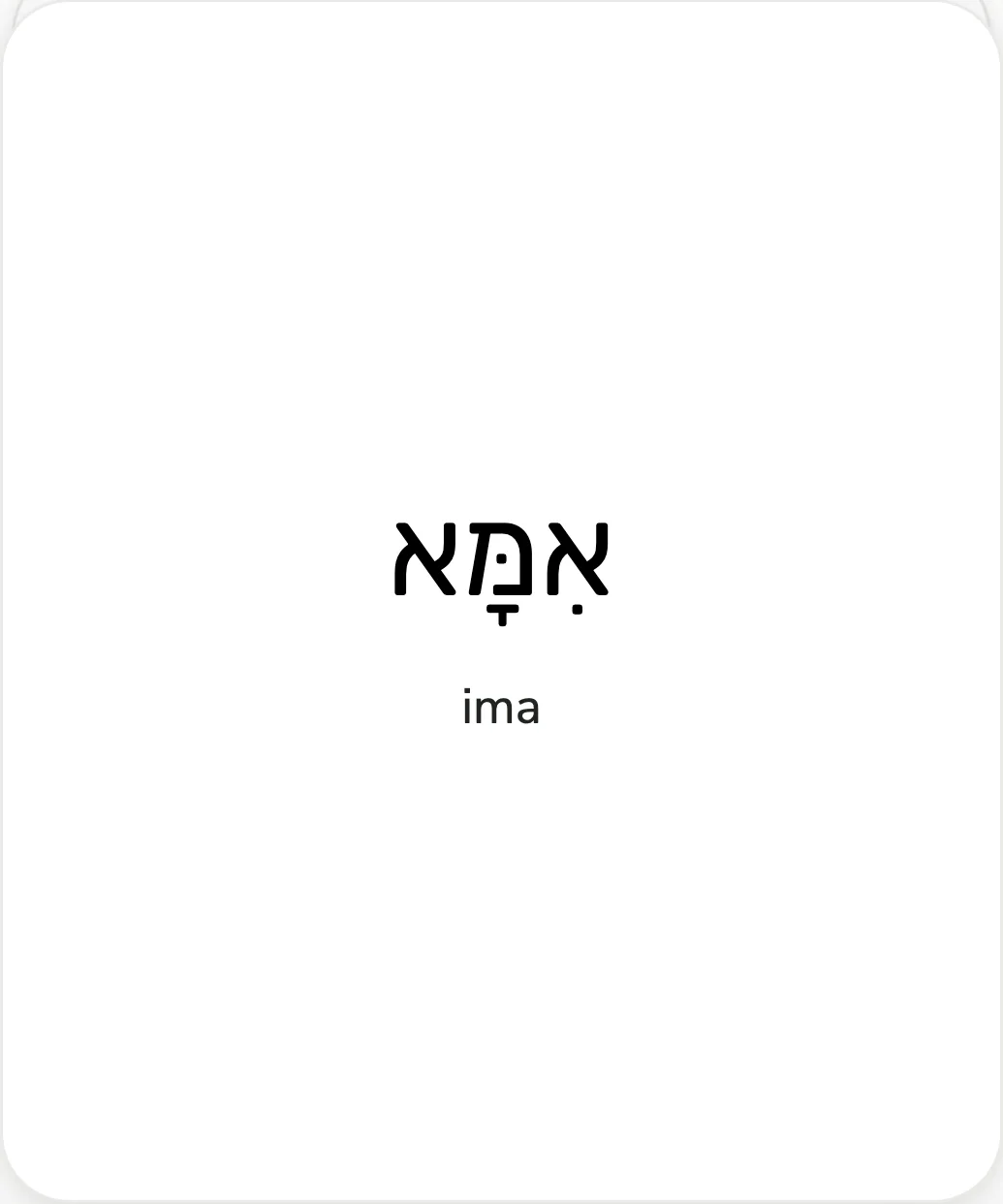
One flashcard for every form of a word
StoryOlive saves , and as one word, so you get one flashcard.
Drops teaches the basic form of each word. In a real text, the same word often has a prefix in front of it, so it looks different from the word you learned.
When Drops makes more sense
If you're brand new to Hebrew and want a short game each day, Drops teaches 2,000+ common words with a picture and audio for each one. Its free plan gives you five minutes every day.
StoryOlive puts those words into 1,200+ stories, so you can see how they work in real sentences. 4
How much does each one cost?
StoryOlive
- Monthly
- $24
- Yearly
- $144 ($12 a month)
- Free
- Your first stories
Drops
- Premium, monthly
- $11
- Premium, yearly
- $69.99
- Lifetime
- $150
- Free
- Five minutes a day
 Checked in November 2026
5
Pros and cons
StoryOlive
- +1,200+ stories written for learners, at six levels.
- +High-quality native audio for every story.
- +Switches for vowel marks, handwriting and romanization.
- +Word meanings read from the whole sentence.
- +A full dictionary entry for every word, with every verb form.
- +Made for Hebrew, not for 55 languages at once.
- −It costs more than Drops.
- −Only your first stories are free, with no free daily allowance.
Drops
- +Every word has a picture and native audio.
- +You get five free minutes every day.
- +It costs less.
- −It has no stories or longer texts to read.
- −It has no grammar lessons for Hebrew.
- −You learn each word on its own, outside a sentence.
- −It's made for 55+ languages, not for Hebrew.
How I wrote this comparison
I'm Robert, and I make StoryOlive. At the end of 2025 I was looking for an app to learn Hebrew by reading stories, and the ones I tried were clearly made for Spanish and French, with Hebrew added later. So I built one for Hebrew. I've tried to be fair here, and I've linked my sources below. If something is wrong or out of date, email me and I'll fix it.