

How to learn Hebrew as an adult: a simple plan
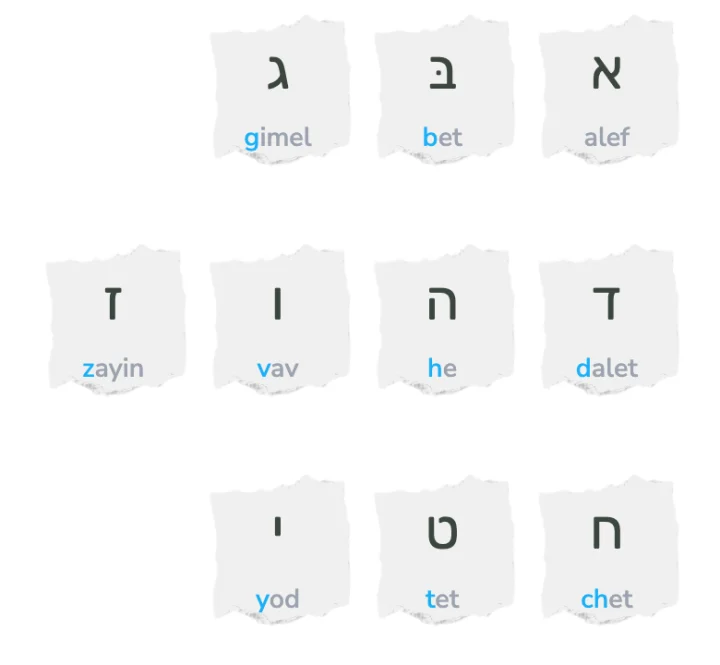
Learn the letters first. Then read a short story at your level for a few minutes every day.

Is Hebrew hard to learn?
At the start, the new letters and reading from right to left feel hard. Most adults get used to them in a few weeks.
After that, Hebrew gets easier. Most words come from three letters, called the root, so you can often guess a new word.
How long does it take?
 The US Foreign Service Institute says its diplomats need about 44 weeks of full-time classes to use Hebrew at work. If you read a little every day, you'll understand simple stories after a few weeks.
Read short stories with vowel marks and audio
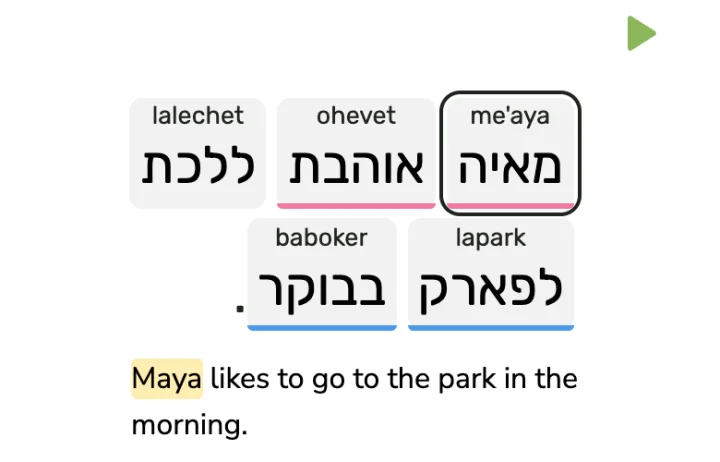
Stories for learners print the vowel marks (nikud), so you can sound out every word.
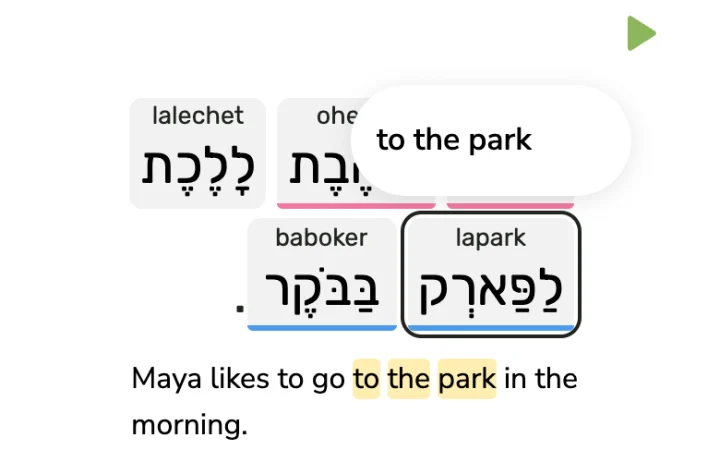
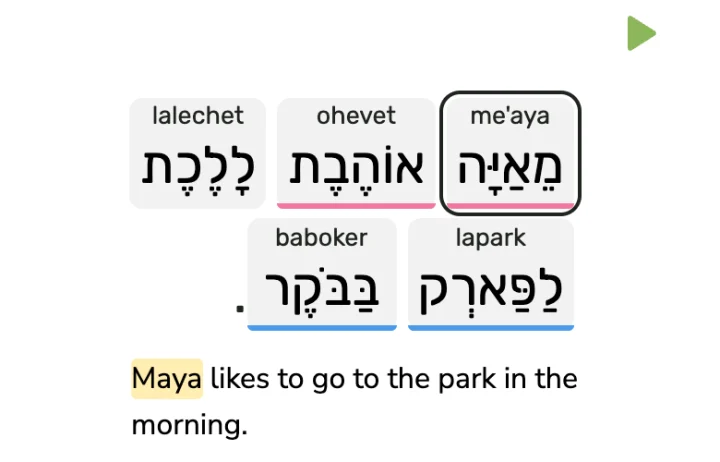
 Every StoryOlive story has native audio, and you can tap any word to see what it means. A beginner story takes about five minutes.
Read without vowel marks, then speak
Most Hebrew in Israel has no vowel marks. So when a story feels easy, read it again with the marks turned off.
 Hearing and reading lots of Hebrew you understand helps you speak. When you've heard a sentence many times, you can say it yourself.
What's free, and when to pay
 Some StoryOlive stories are free, and so are alphabet charts and podcasts. Pay for an app when you read every day, and for a teacher when you want to talk.