
StoryOlive vs Rosetta Stone for Hebrew
If you want to read Hebrew, StoryOlive gives you 1,200+ stories at your level, with native audio. If you want picture lessons that check your pronunciation, choose Rosetta Stone.
Read a free story By Robert MacAlpine, founder of StoryOlive · Updated
| Feature |  StoryOlive |  Rosetta Stone |
|---|---|---|
| Stories written for learners | 1,278 stories at six levels, from beginner to fluent | Picture lessons in 3 levels |
| How far it goes | Up to fluent | Beginner level |
| Word meanings | Tap any word, meaning picked from the whole sentence | No translations, you guess from pictures |
| Grammar | 120,000+ forms across 4,400+ verbs, each with its root | No explanations in English |
| Audio | Native audio on every story | Native speakers |
| Vowel marks (nikud) | On or off in every story | No switch listed |
| Handwriting | Handwriting font, on or off | Not listed |
| Pronunciation check | No | TruAccent speech recognition |
| Live tutoring | No | Sold separately |
| Price | $24 a month, or $12 a month yearly | $19.99 a month, or $159 a year ($13.25 a month) |
| Read a free story |
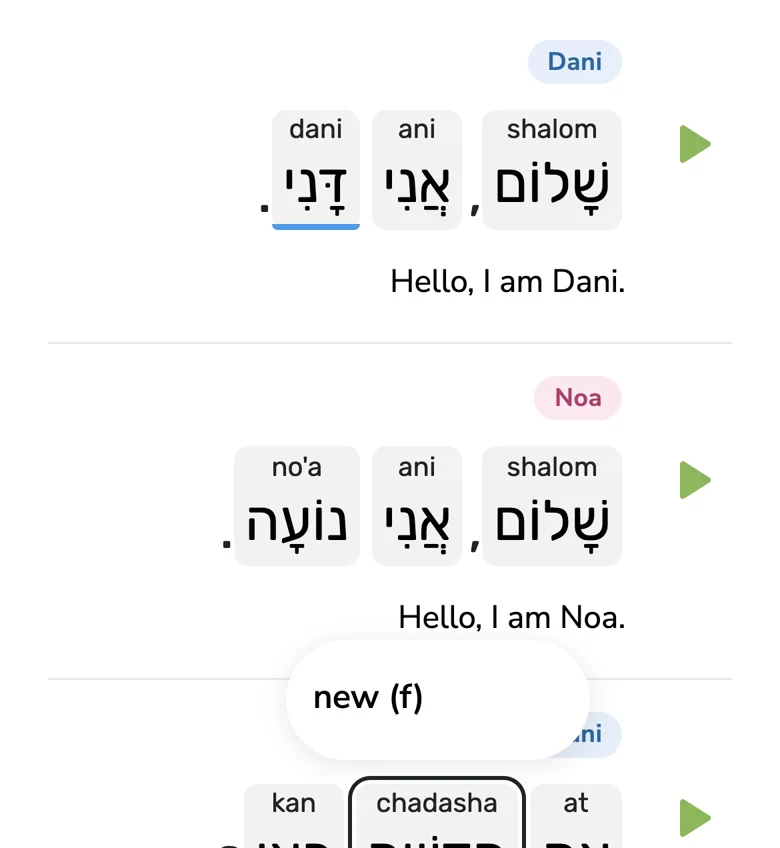
Tap a word to see what it means in that sentence
StoryOlive reads the whole sentence, not just the letters, so it shows you the right meaning. Without vowels, and are spelled the same, and you still get the right one.
Rosetta Stone teaches without English on purpose, so it shows pictures instead of translations. When a picture can't show a meaning, you have to guess.
1
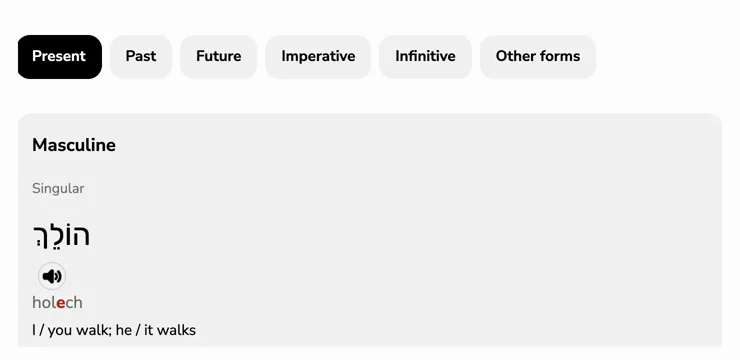
Every word has its own dictionary entry
Tap any word to open a full dictionary entry made for Hebrew. You see its root and its meanings, and for a verb, every form with vowel marks and audio.
Rosetta Stone doesn't explain grammar in English, so you work out the rules from the examples.
1
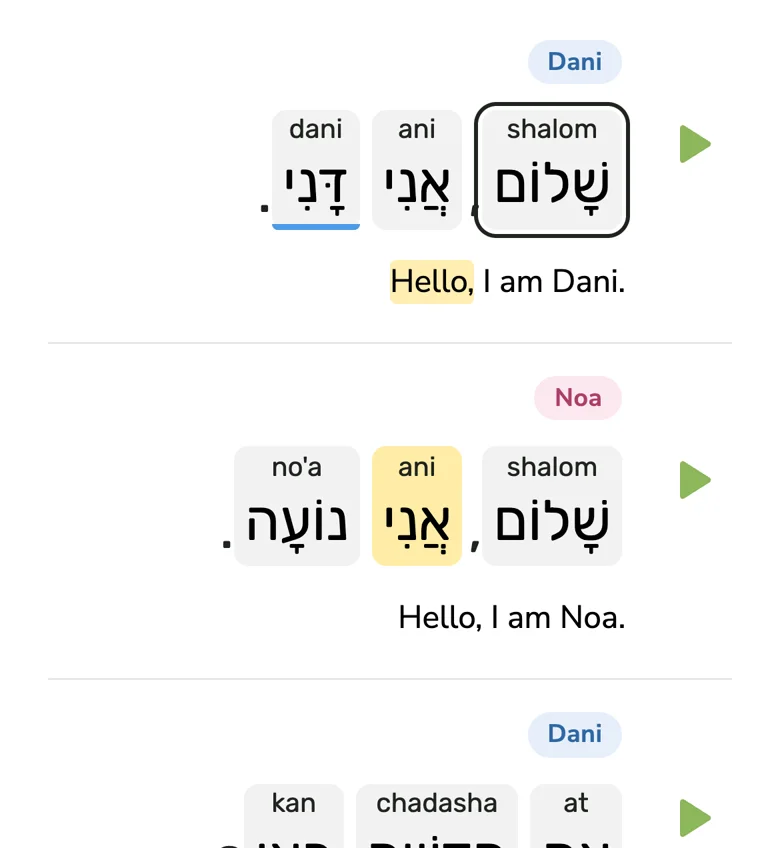
Every story has native audio
Every StoryOlive story comes with high-quality native audio, and the Hebrew text stays on the screen while you listen. You can play the whole story, one sentence, or a single word.
Rosetta Stone also uses native speakers. You hear them in short phrases that you match to pictures.
2
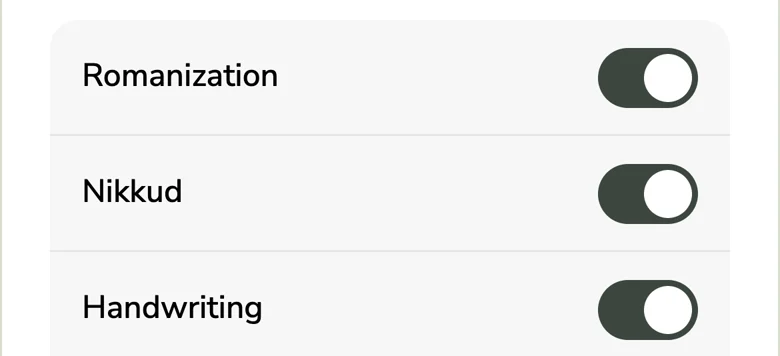
Advanced support for the Hebrew script
Keep the vowel marks (nikud) on while you learn, and switch them off when you're ready. You can also switch to handwriting, or show the romanization above every word.
Rosetta Stone teaches the 22 letters and their final forms. Its Hebrew page doesn't list a switch for vowel marks or a handwriting font.
2
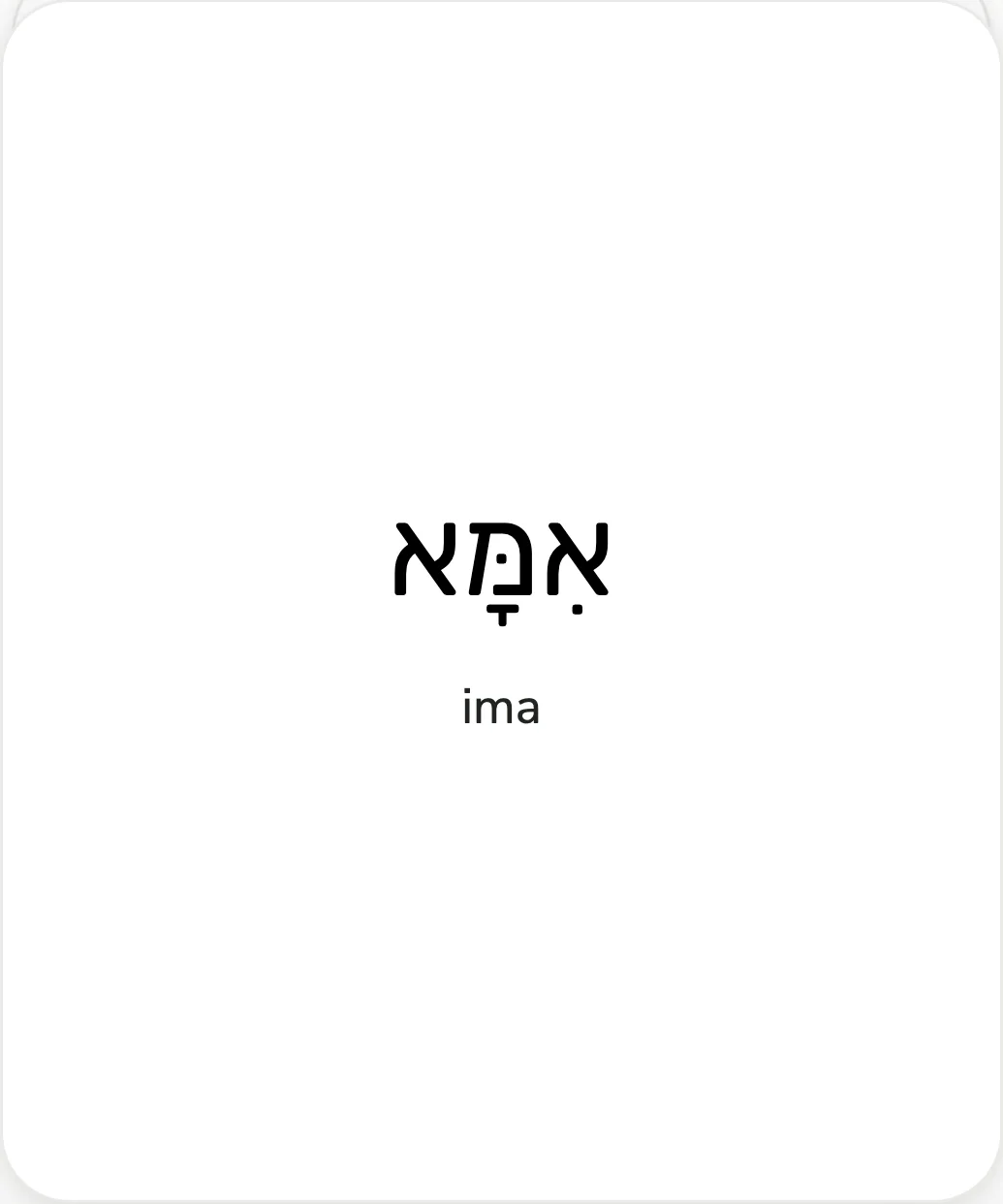
One flashcard for every form of a word
StoryOlive saves , and as one word, so you get one flashcard.
Rosetta Stone has over 500 ready-made flashcard sets. Everyone gets the same sets, whichever words you've seen.
2
When Rosetta Stone makes more sense
If you're starting from zero and want to say your first phrases out loud, Rosetta Stone checks your pronunciation with speech recognition. Some learners also like that it uses no English at all.
When you're ready for more, StoryOlive has 1,200+ stories at six levels, from beginner to fluent. 2
How much does each one cost?
StoryOlive
- Monthly
- $24
- Yearly
- $144 ($12 a month)
- Free
- Your first stories
Rosetta Stone
- Monthly
- $19.99
- Yearly
- $159 ($13.25 a month)
- Free
- The first lesson
 Checked in November 2026
3
Pros and cons
StoryOlive
- +1,200+ stories that go from beginner to fluent.
- +The meaning of every word is one tap away.
- +A full dictionary entry for every word, with every verb form.
- +Switches for vowel marks, handwriting and romanization.
- +High-quality native audio for every story.
- +The yearly plan costs less than Rosetta Stone's.
- −It doesn't check your pronunciation.
- −One month costs more than Rosetta Stone's monthly plan.
Rosetta Stone
- +TruAccent speech recognition checks your pronunciation.
- +It teaches the 22 letters and their final forms from the start.
- +Its monthly plan costs a little less.
- −It doesn't translate words, so you sometimes have to guess.
- −Its Hebrew course has three levels, all for beginners.
- −Its Hebrew page lists no switch for vowel marks.
- −Live tutoring costs extra.
How I wrote this comparison
I'm Robert, and I make StoryOlive. At the end of 2025 I was looking for an app to learn Hebrew by reading stories, and the ones I tried were clearly made for Spanish and French, with Hebrew added later. So I built one for Hebrew. I've tried to be fair here, and I've linked my sources below. If something is wrong or out of date, email me and I'll fix it.