Skip to content
StoryOlive
I know English
I’m learning Hebrew
Browse stories

Modern Hebrew: what it is and how to learn it

Modern Hebrew is the language people speak in Israel today. It uses the same letters as the Bible, with everyday words and simpler grammar.

What is Modern Hebrew?

For centuries, Jews used Hebrew to pray and study, but not at home. In the late 1800s, families in what is now Israel started speaking it every day, and today about 10 million people speak it.
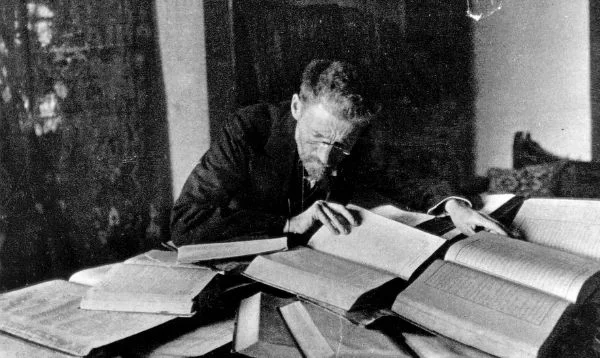
A black and white photo of Eliezer Ben-Yehuda leaning over open books at his desk.
Eliezer Ben-Yehuda at his desk in Jerusalem, in about 1912. He wrote the first modern dictionary of Hebrew. Photo: Shlomo Narinsky, public domain, via Wikimedia Commons

How is it different from Biblical Hebrew?

Modern Hebrew uses the same 22 letters and many of the same roots. It also has thousands of new everyday words.

If you learned Hebrew for prayer, you already know the letters and many roots.
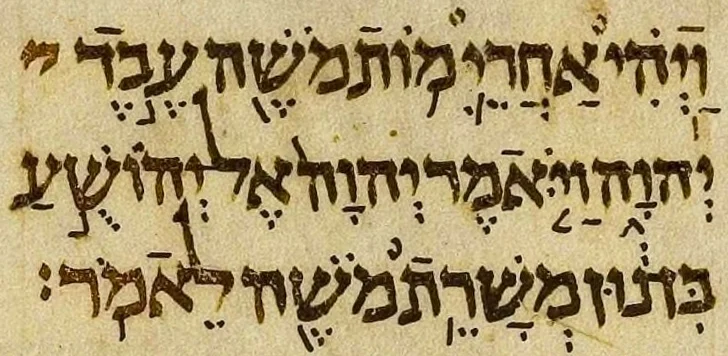
Three lines of handwritten Hebrew from the Aleppo Codex, with vowel marks around the letters.
These lines are from the Aleppo Codex, a Hebrew Bible that scribes wrote about 1,100 years ago. Israelis use the same letters today. Image: Aleppo Codex (Joshua 1:1), public domain, via Wikimedia Commons

It's usually written without vowel marks

Newspapers, signs and text messages in Israel leave out the vowel marks (nikud).

In StoryOlive, you can turn the vowel marks on and off in every story.
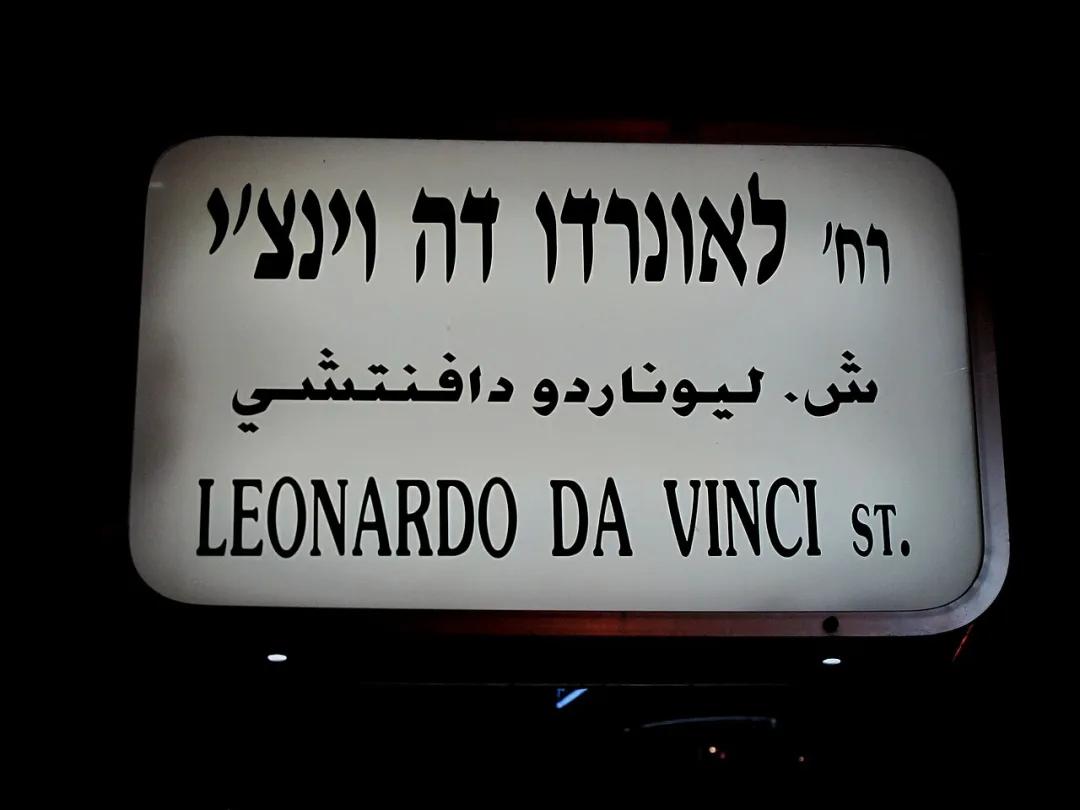
A lit street sign in Tel Aviv that says Leonardo da Vinci Street in Hebrew, Arabic and English. The Hebrew has no vowel marks.
This street sign in Tel Aviv gives the name in Hebrew, Arabic and English. The Hebrew line has no vowel marks. Photo: Sheri Oz, CC0, via Wikimedia Commons

How to start learning Modern Hebrew

First, learn the letters. Then read a short story at your level for a few minutes every day.

Every StoryOlive story is in Modern Hebrew, with native audio.
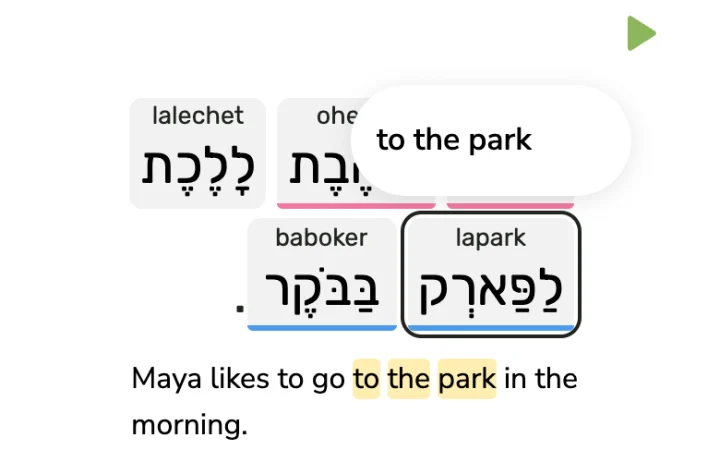
A Hebrew sentence with vowel marks in the StoryOlive reader. The word lapark is selected, and a bubble above it says "to the park".
When you tap a word in a story, you see what it means in that sentence.